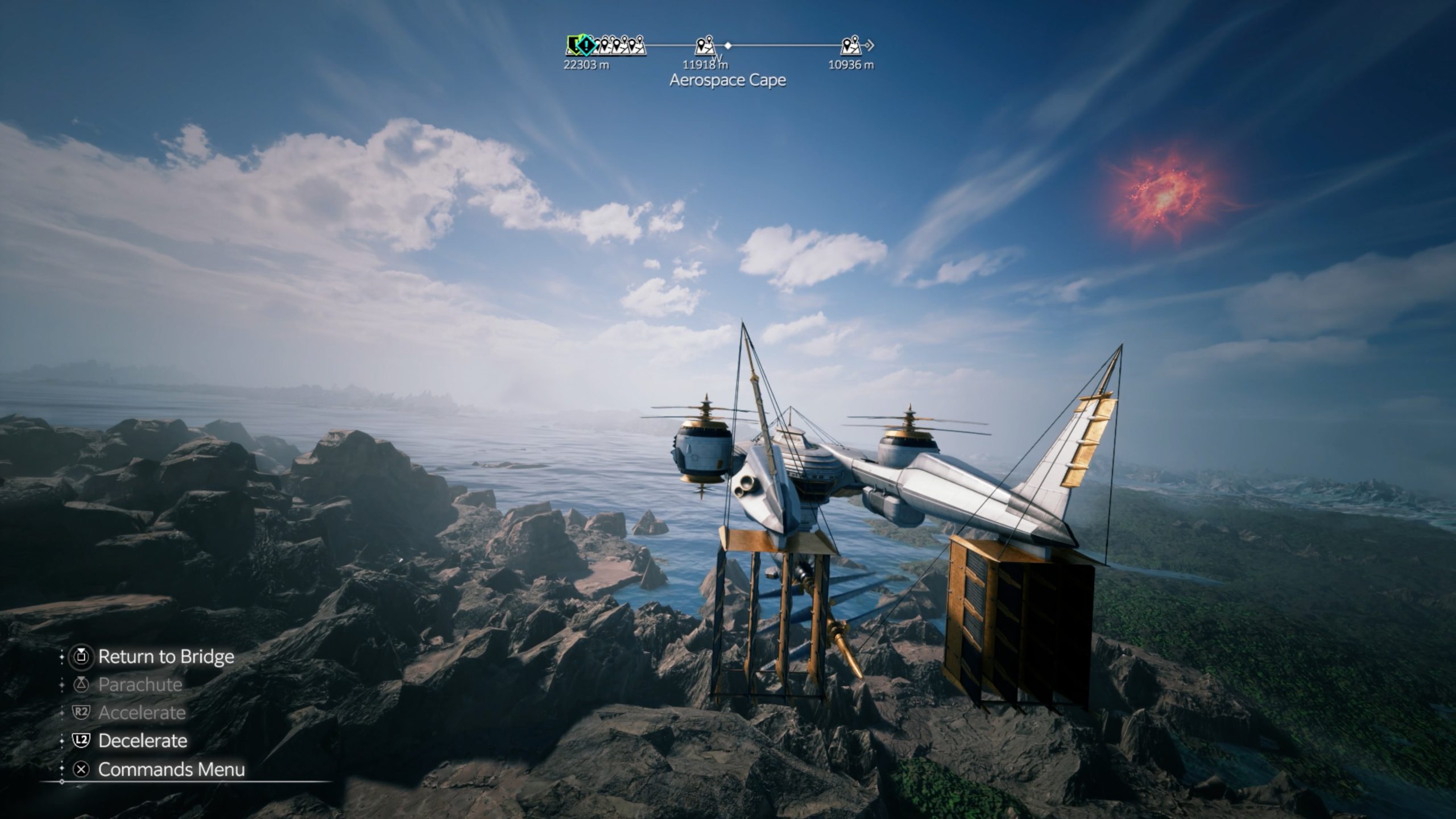
Final Fantasy VII Revelation was hands-down among the best reveals of the Summer gaming showcases, if not the very best. Although the game was a known quantity, given the amount of teasing director Naoki Hamaguchi had done in the previous months, seeing the Highwind soar over Gaia and Cloud and his companions parachute down toward the biggest open-world the series has delivered to date was one of those moments that sticks, much like the announcement of the entire Remake trilogy.
While the reveal awed fans of the series, the question remained about how the third and final entry in the series would handle its massive open world. Final Fantasy VII Rebirth took a somewhat stiff approach to open-world exploration, which some did not appreciate much, as they felt it significantly padded the game’s length. Although I disagree with these opinions, as the part of the original story Final Fantasy VII Rebirth remade was relatively light in terms of big events, I definitely understand where they are coming from.
Naoki Hamaguchi, who told us in a lengthy interview that armor has been changed to feature 3 Materia slots links, and his team definitely reflected on the player feedback from Final Fantasy VII Rebirth. During gamescom 2026, Square Enix invited me to try Final Fantasy VII Revelation for roughly 1 hour, and while the allotted time was not enough to check out everything that I wanted (they almost had to pry me from my demo station!), it was more than enough to show how massive an improvement it is over its predecessor, especially in terms of player agency.
Redefining World Traversal
The Final Fantasy VII Revelation gamescom 2026 demo was set during Chapter 4, roughly 20 hours in. For story reasons I won’t spoil here, Cloud and Tifa were not available, but the rest of the gang was. Following the usual rousing speech from Barret, the party decides on Yuffie‘s behest that heading to Wutai would be beneficial to their mission of stopping Sephiroth and the Meteor as the Weapons roam the land. However, the third entry in the series is a game based on choice, and, as such, I chose not to head straight to Wutai to proceed through the story, but check out a couple of regions – namely Mideel to see a new region, the Grasslands, and the Junon Region to see the changes to regions returning from Final Fantasy VII Rebirth.
Even before dropping into any of the regions above, however, I experienced my first moment of awe. Taking control of the Highwind and roaming the world seamlessly felt like the proper modern realization of the typical JRPG‘s world map since the original PlayStation generation. Although there were still some markers here and there, they were limited to the region’s name and available events, so they weren’t invasive at all. After reaching Mideel, I dropped down using the parachutes, and that was the second awe-inspiring moment of the demo: the sense of scale is incredible and rivals that of other open-world games.
During this sequence, markers appear once again, but they are not as invasive as those of Final Fantasy VII Rebirth. They provide a rough indication of where points of interest are located, and their early appearance during the descent allows the player to go in their direction as they open the parachute early. In addition, the landing process is made smoother by the option to land directly on Piko, reducing downtime and creating an incredibly smooth feel.
This was one of the main takeaways from my time with Final Fantasy VII Revelation. The game is all about removing the most annoying points of friction to deliver the smoothest experience possible.
Once I landed on Mideel on Piko, it became clear how the third entry in the series will improve the exploration and traversal mechanics of Final Fantasy VII Rebirth. While on the Chocobo, it is possible to use its unique abilities to propel into the air and dash in rapid succession, doing away with much of the traversal stiffness of the second entry in the series. In Mideel in particular, I encountered little to no barriers: if I could see an area, I could get to it.
In addition, Final Fantasy VII Revelation also features a set of traversal tools that are used to access the open-world content, such as the new Cetran Shrines, which hide secrets discoverable only by using one of these tools, or pinpoint the location of Battle Intel monsters. Not having to unlock towers and going into menus to discover points of interest feels great, making the open-world exploration feel more organic, like in titles such as Elden Ring, The Legend of Zelda: Breath of the Wild, and The Legend of Zelda: Tears of the Kingdom. It makes the world feel more cohesive and less about checking boxes like in Final Fantasy VII Rebirth.
Not opening the map at all, I just explored where I wanted, making all sorts of discoveries – sidequests (which the game advised me not to take on due to the high level of enemies involved), a couple of those aforementioned Cetran Shrines, wildlife (which players now can take pictures of to complete a region’s completion rate), and all sorts of enemies, obviously.
With the Meteor and the appearance of the Weapons having a significant impact on the planet, the returning regions have changed somewhat. In the Grasslands, for example, a crater has appeared not too far from the Chocobo Ranch where a powerful monster is nesting. Although I felt very confident about my combat skills, I preferred to avoid a confrontation to focus on regular enemies to get a better grasp of the new additions made to the combat system.
With Cid and Vincent finally joining the party, they were among the features I was looking forward to most, and Naoki Hamaguchi and his team definitely delivered in this regard, as much as they did in enhancing the open-world experience.
Cid and Vincent’s Combat Design Elevates the Entire Experience
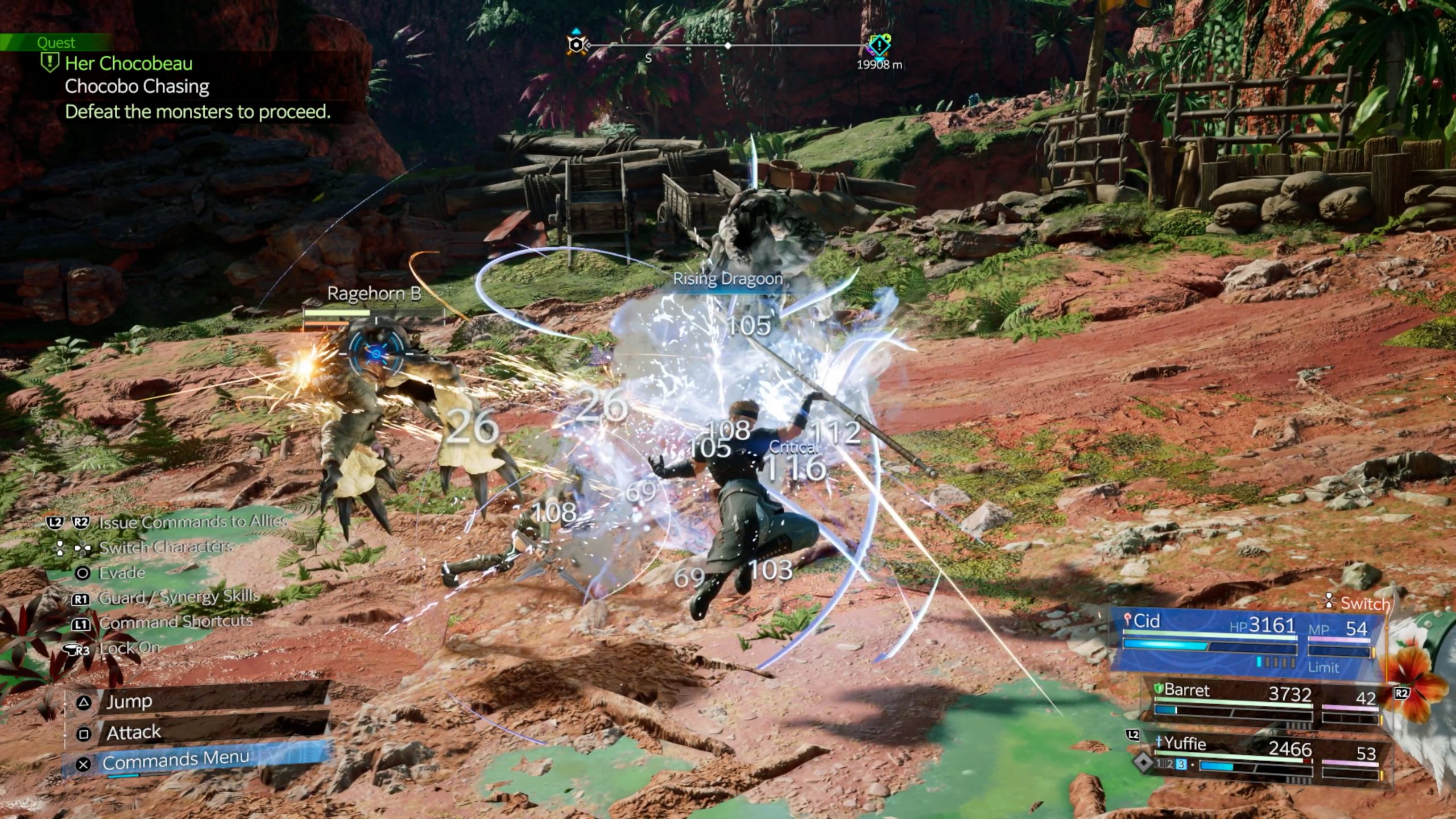
With every other party member having a pretty defined role in Final Fantasy VII Rebirth, with some overlap with the two new characters, Cid and Vincent were required to be different than anyone else. And their design not only makes them quite distinct, but also elevates the entire combat design to new heights.
Cid is set to become the ultimate crowd controller for the entire team. His spear has incredible reach, and with his Mark special ability, he can attack multiple enemies at once with the correct attacks. Even without taking his aerial-focused playstyle into account, which lets him deal more damage while in the air, Cid feels more like a character-action game character, much like Yuffie. His regular attacks lead to different follow-ups depending on the timing of the attack button press. Unfortunately, I wasn’t able to delve deeper into this, but I did discover a few follow-ups, ranging from wide sweeps to multiple fast thrusts, that showed his incredible versatility. Unlike Cloud, he doesn’t seem to have access to a true ranged attack, but even so, he definitely exuded some main character energy with his combat kit.


Surprisingly enough, Vincent seems to sport even more depth in his combat kit. His long-range basic attacks, coupled with his high speed, make him a fast-attacking character who can also launch into the air, which surprised me as I expected him to be a grounded fighter like Barret. The depth of his kit, however, comes with the ability to transform into the Galian Beast at any time, as long as ATB is available. It works not too differently from Cait Sith‘s ability to summon the Moogle, only that this “stance switching” is way more combat-oriented, as it is possible to cancel attacks with the transformation ability with little to no delay! I’m sure this will lead to some impressive combos that will see Vincent switch between his fighting styles seamlessly, further pushing the series’ combat system into action-game territory.
Being in the middle of another Final Fantasy VII Rebirth playthrough, I also briefly played with the returning characters to see if there were any changes. On the surface, they play in Final Fantasy VII Revelation as they did in the second entry in the series, and none of them had any new combat ability to test out, so they instantly felt familiar. However, I am strictly speaking about their basic movesets, as the FITS system is bound to further expand and enhance their fighting styles.
Dressing Up For The Occasion: The FITS System
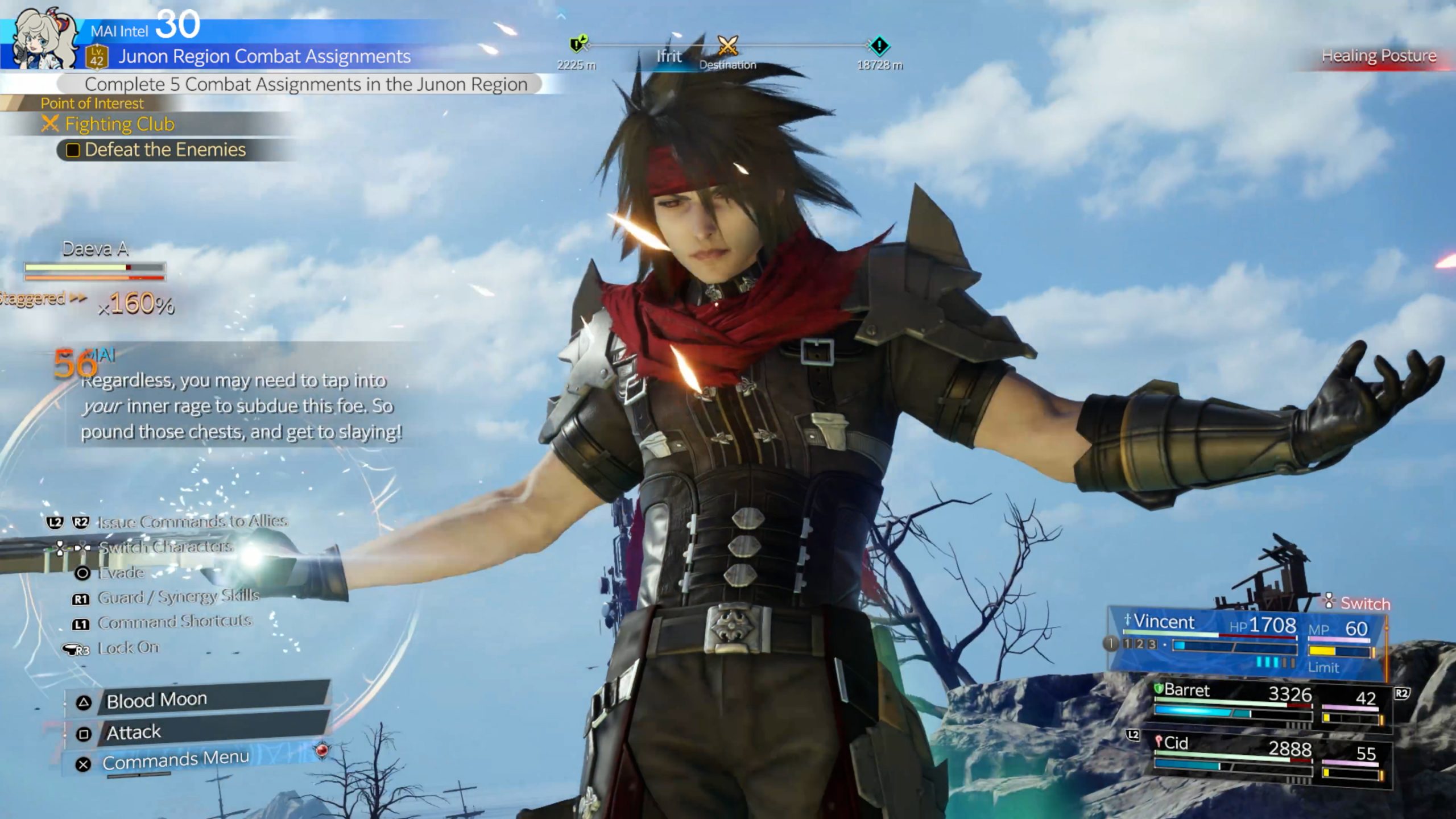
The introduction of a Job system to the third and final entry in the Final Fantasy VII Remake trilogy was definitely not among my predictions. But still, I was really excited for it, as it has always brought a wealth of customization options in the games that featured it. Although I couldn’t take a proper look at everything the Warrior, Knight, Black Mage, and Summoner FITS will offer via the Folios skill trees, I experienced enough of some of them to say that they are a game-changer, having the potential to really turn characters into something they were not in previous games.
The Warrior, for example, allows any character to use ATB moves without actually spending ATB with one of its mechanics, using some sort of charge that goes into cooldown once used. While Yuffie was a perfect fit (pun wholly intended) for it, I immediately tried using Barret with it, which led me to abuse his Maximum Fury ability so much that regular mobs were evaporating in seconds. The Knight was a great fit for him as well, significantly enhancing the tank nature of his regular combat kit.
The Knight also worked great with Red XIII (who’s finally called Nanaki even in the game’s menus!). As his Vengeance Mode requires him to block and parry attacks, having the ability to Taunt enemies to attract attention finally makes parts of his kit shine. As the Knight also makes it easier to charge the Limit bar, as some of its abilities require it to activate, he finally fulfills his tank-support role properly with it.
As the time with the demo was short, I couldn’t delve deeper into the Black Mage and Summoner FITS. The former is geared toward offensive magic use and can use some of Aerith‘s wards, which would have been absent in Final Fantasy VII Revelation due to well-known story reasons. Summoner, on the other hand, finally gives Summons a more prominent role, allowing the syncing of their attacks with those of the Summoner.
A World of QOL and Materia Expansion
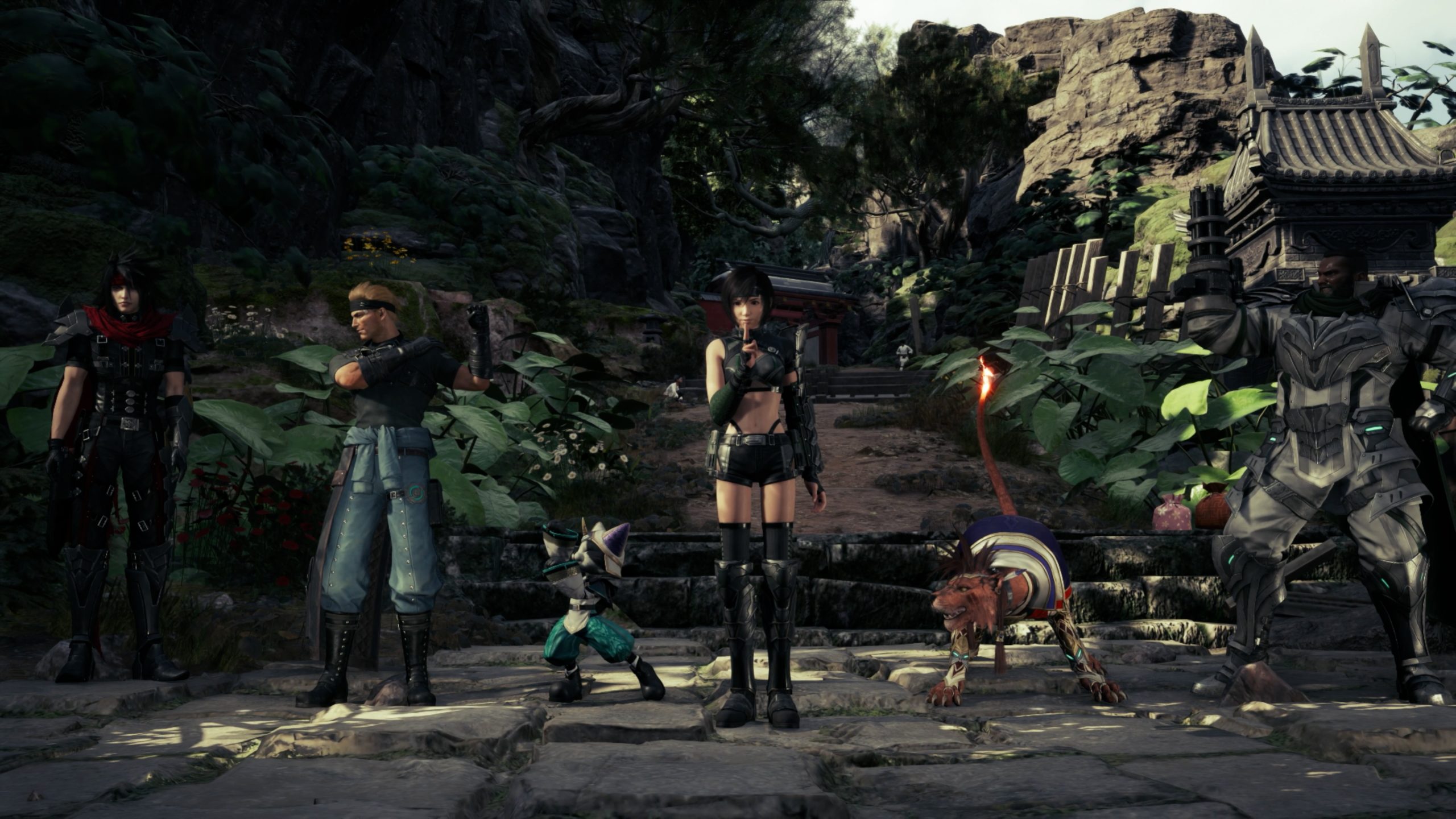
Besides the significant improvements outlined above, Final Fantasy VII Revelation also packs smaller but no less important improvements. I particularly appreciated some QOL improvements in the battle interface that warn the player when a Summon or Synergy Ability is available for use. In the heat of battle, it is easy to ignore when the pips are filled, so this is sure to make more players use these cinematic combination attacks, whose secondary effects seem to be identical to those seen in Final Fantasy VII Rebirth (unlimited MP for a while, increased Stagger time, or Limit level increase).
While not exactly QOL, it seems like the Materia system was also expanded to make life somewhat easier for the player. Some of the new Materia include Diffusion Materia, which allows all characters in the combat party to use the linked magic Materia, and the Evasion Focus Materia, which finally adds a significant invincibility window to dodges. These new Materia also seem to offer players more choice throughout the experience, and I expect all players to appreciate their addition as much as I did.
The JRPG of the Generation?
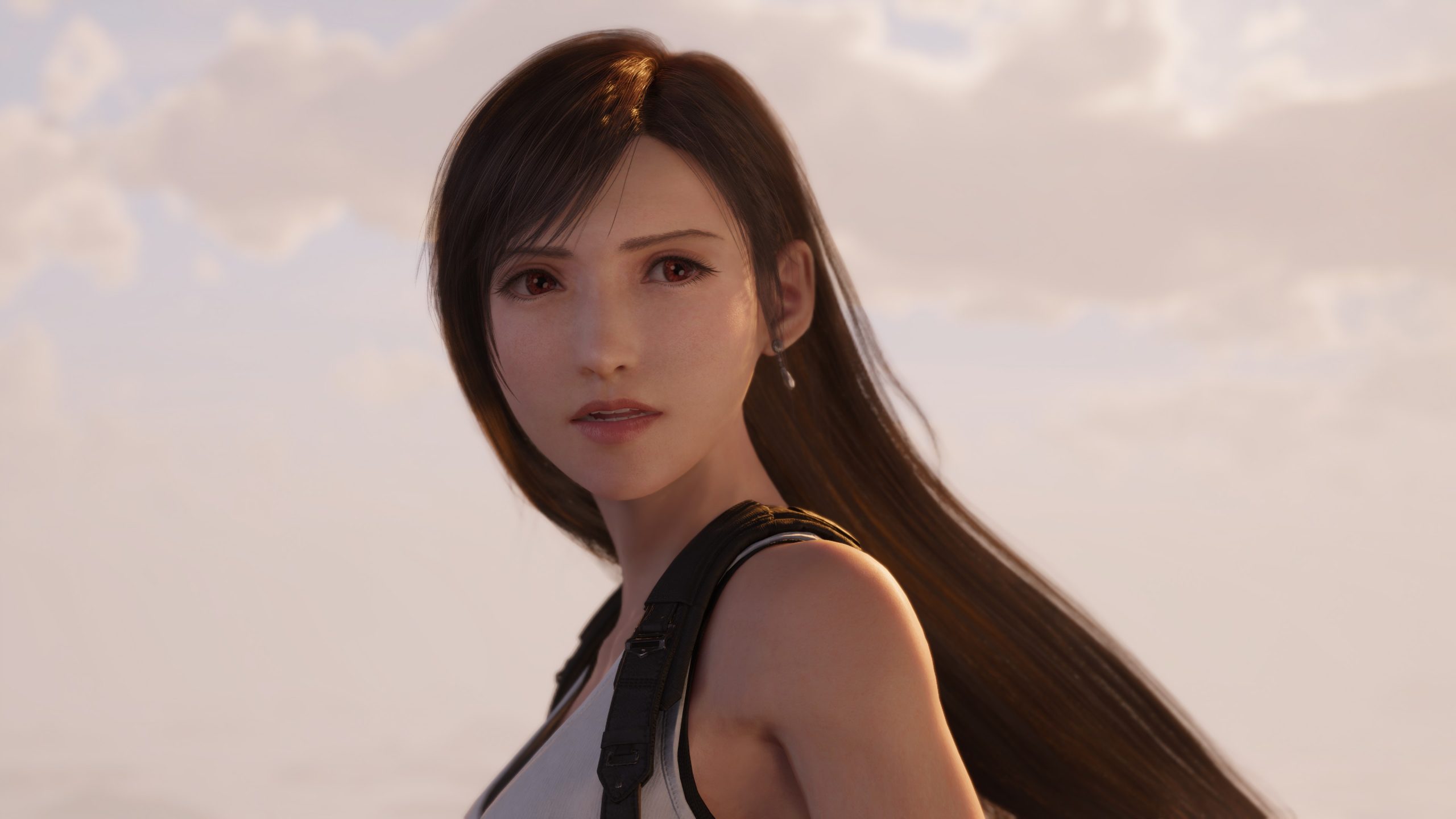
While I wasn’t able to check out everything I wanted in the Final Fantasy VII Revelation demo due to the limited time, and couldn’t even get into one match of the expanded Queen’s Blood card minigame, I have little doubt: the third entry in the series has the extreme likelihood of becoming the JRPG that will define the current console generation.
There are no words I can use to express how good the game feels to play. If you love Final Fantasy VII Rebirth as I do, you will be immediately entranced by the significant improvements made to open-world exploration. And if you don’t, but still love the original, I’d still advise you to keep an eye on the game: Naoki Hamaguchi and his team have taken player feedback to heart, and addressed pretty much every one of the issues that may have prevented you from enjoying the second entry in the series.
Without a doubt, Final Fantasy VII Revelation was the best game I played during gamescom 2026. As such, the wait for its release on April 8, 2027 is going to be really difficult to bear!

About the author: Francesco De Meo has been covering video games and technology since 2012, starting his career at small outlets like Gamersyndrome and GeekSnack.
After joining Wccftech gaming section in 2015, he quickly expanded his video gaming coverage with in-depth reporting, interviews with iconic industry figures such as Grasshopper Manufacture founder and No More Heroes creator Goichi “Suda51” Suda, Resident Evil series creator Shinji Mikami, Team NINJA’s president and Nioh series director Fumihiko Yasuda, and Silent Hill creator Keiichiro Toyama, reviews and on-the-ground coverage of major industry events such as Gamescom and E3.
When he’s not reporting or reviewing, Francesco can be found playing the genres he loves most, spending time with his six cats, reading, writing music, playing guitar and drumming for his progressive rock band.
Follow Wccftech on Google to get more of our news coverage in your feeds.