
Marvel’s Wolverine
September 15, 2026
Platform
PlayStation 5
Publisher
Sony Interactive Entertainment
Developer
Insomniac Games
It’s no secret that Marvel’s Wolverine holds Sony‘s biggest hopes among its first-party releases this year. Bungie’s Marathon and Housemarque’s Saros have both already largely underwhelmed, albeit for different reasons and with different outcomes. After Wolverine, the only other Sony-published release due in 2026 is Ghost of Yōtei: Complete Edition, which, however, is unlikely to make a major splash given that it’s just a full edition of a game already released last year, adding the new Echoes of Sekigahara expansion that will also be available as a separate purchase.
It all rests on the shoulders of Insomniac Games, then. The Californian studio has already proven its Marvel chops with the Spider-Man games: those titles have been a gold mine for Sony, nearing the 60-million-unit mark in combined sales, although with the caveat of Marvel’s hefty licensing fee. The question is, can they do it again with Marvel’s Wolverine?
The Canadian mutant and regular member of the X-Men certainly has never been more popular thanks to Hugh Jackman‘s acclaimed portrayal of the character in movies, but Spider-Man is on another level entirely. Besides, Wolverine demands a far more mature storyline, which inevitably restricts the audience a bit compared to the more teen-friendly adventures of the friendly neighborhood superhero from Queens.
A Nomad Doesn’t Get an Open World
Perhaps a more pressing question for gamers, though, is whether this game’s formula works. Whereas the Spider-Man titles were open world games set in Manhattan due to the superhero’s long-standing association with New York, Wolverine is essentially a nomad, and as such, it would have felt forced to make him stick to a single place. This single difference translates into a significantly distinct gameplay experience: Marvel’s Wolverine is a mostly linear game, leaving little room for exploration compared to what players are used to nowadays.
That may irk some people, and it certainly didn’t thrill me at first. For the initial half of the game, the only detours are to an adjacent alley or path to find material crates that contain resources to craft new suits or to find a new whisky bottle. Both collectibles are actually quite important to progression, because even though the suits are cosmetic-only, it is by crafting them that you upgrade Wolverine’s overall health. As for the whisky bottles, they accumulate AP, which are then used to unlock Adaptations, a sort of skill tree that modifies Wolverine’s abilities in various ways.
So, there is actually a pretty serious incentive to gather all these collectibles. However, it’s extremely easy to do so between the small environments and Wolverine’s own enhanced senses, which point the player in the right direction. Now that I have finished the game, I looked back through the levels and found that I completed most of them at 100% on the first try, without really needing to scout for those things. Thankfully, the later levels offer a bit more exploration, thanks to larger maps that make you genuinely want to roam a bit. I just wish Insomniac had decided to design the whole game, or at least more of it, after this model.
There is another side activity called Nightmare Trials. These are framed in the story as blocks placed by Logan’s mind to protect him from past traumas; indeed, completing each Trial allows him to destroy the block and unlock a corresponding memory. The very first one is unlocked during a story mission for Logan by Nathaniel Essex, the creator of Team X, but the others are all optional. Again, though, it’s nearly impossible to miss them: whenever in their vicinity, a pretty clear trail will lead Wolverine to them.
Nightmare Trials are split into traversal and combat; the former are honestly pretty underwhelming, as there truly isn’t much skill involved in passing them, while the combat ones are far more interesting. The latter ones involve various combat scenarios that meaningfully test the player’s skill in a fun way. Each Trial can be completed at four levels: Bronze, Silver, Gold, and Platinum, with each tier granting some reward. Arguably, the most important part is that completing them all, even at a Bronze level, unlocks an extra cutscene with Jean Grey that nicely ties Logan’s relationship with her throughout the game.

Becoming the Living Weapon Through Sheer Rage
I would say that combat is perhaps one of two main pillars in Marvel’s Wolverine, the other being the story. So, how does it feel? Well, it didn’t quite land with me immediately. It’s very different from Spider-Man’s, obviously, and I initially missed the Webslinger’s superior agility and environmental interaction powered by his crafty gadgets. There’s also a distinct tempo to the game’s parry and dodge windows that took me some time to get used to, possibly because I have played a lot of different action games lately, between recent reviews and the Gamescom trip, and each had its own take on combat.
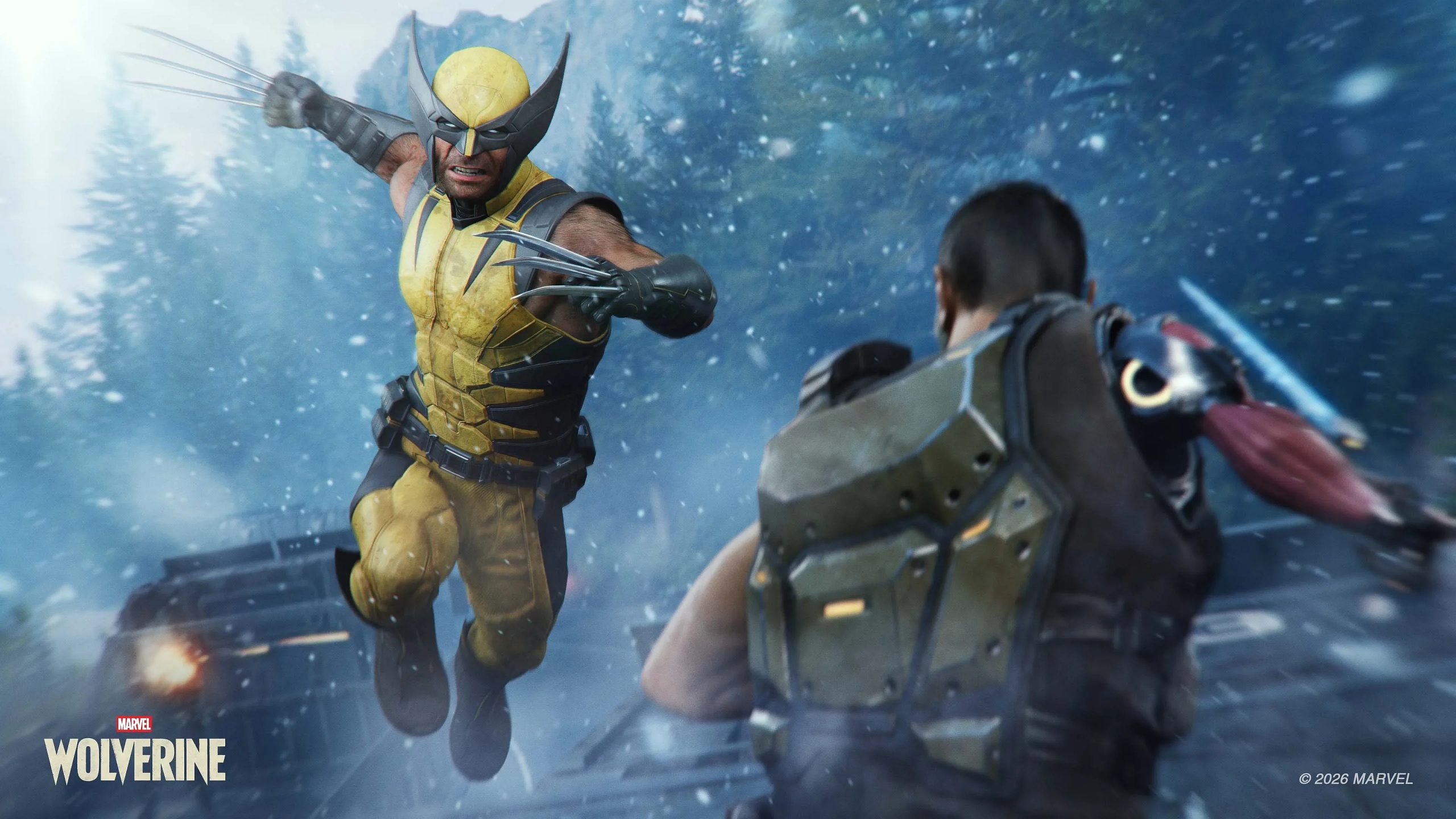
About halfway through, however, it all started to click, as I got into the game’s unique flow and unlocked the various cooldown-based active abilities (called Techniques) available to Wolverine. That’s when I really started to feel like the Living Weapon this character is supposed to be. While Wolverine does have defensive moves like blocks, perfect blocks, dodges, and perfect dodges, and you should use them all, what you really want to do is jump from one enemy to another, in a relentless flurry of adamantium claws.
That’s because the whole combat is centered around Logan’s Rage, arguably the character’s defining trait from a lore standpoint, which is mechanically split into three tiers. Just like with World of Warcraft’s Warrior or Diablo IV’s Barbarian classes, rage decays over time, encouraging the player to take the fight to another foe as soon as possible. In Marvel’s Wolverine, it decays faster if you’re on the second tier and even quicker if you’re on the third one, but the flip side is that your combos get more deadly as Wolverine’s savageness ramps up to the latter Rage tiers.
On the third tier, a visual filter inspired by Marvel Comics’ Black, White, and Blood anthology series colors the game world in black and white, while still painting blood in red streaks to better highlight the mutant’s devastating power when fully unleashed. In this tier, you’re basically flying from one enemy to another, triggering the brutal Critical Strikes executions with L2+R2. And make no mistake, it ends up being a slaughterhouse, the likes of which is rarely seen in games. The procedural dismemberment tech adds a great deal of immersion to these moments and I personally wouldn’t have it any other way, but those who wish can tone the extreme gore down via an option in the accessibility settings.


Rage is also tied to the game’s health regeneration system. Wolverine is, of course, constantly regenerating a bit of health (except when there is an X-gene dampener nearby, which you’ll have to destroy right away), but even common enemies are no pushover, at least on Hard difficulty, and it is possible to be taken down. That Logan would die to such nobodies is a bit of a heresy in terms of Marvel lore, but I can fully understand that a game like this needs to allow for player failure. Insomniac’s compromise was that, as long as you have at least one full Rage tier, you can mash the square button and get up as a Last Stand of sorts, refilling the entire health bar; the downside is that this will consume whatever Rage you have, so if you were at a full third tier, it’ll go entirely away. There’s also a handy active ability that triggers health regeneration without sacrificing Rage, though, and it was always in my loadout.
As entirely befitting of a game dedicated to a superhero, my combat highlights were the boss fights, and even in this case, the best ones all occurred in the second half of the playthrough. They were balanced enough to be challenging without veering into real frustration, and they looked visually spectacular.
Finally for the combat, a few words on Logan’s so-called companions. Before the launch, the developers mentioned that while players can only control Wolverine, AI-controlled teammates would help him from time to time, setting up finishing moves and the like. In truth, it’s really the one companion with whom Logan spends most time, while another is only available for a mission or two, if I recall correctly. I won’t unveil who that is, though Wolverine fans will likely have figured it out already. Anyway, the system itself is pretty one-sided in that it’s only the NPC who sets up Critical Strikes for Logan. Which is cool, but it would have felt much more dynamic if players could tag specific foes for the companion to attack and possibly set up finishing moves for them, too. It’s not a big deal by any means, but perhaps something to improve in a potential sequel.
A Story That Earns Its Emotional Weight
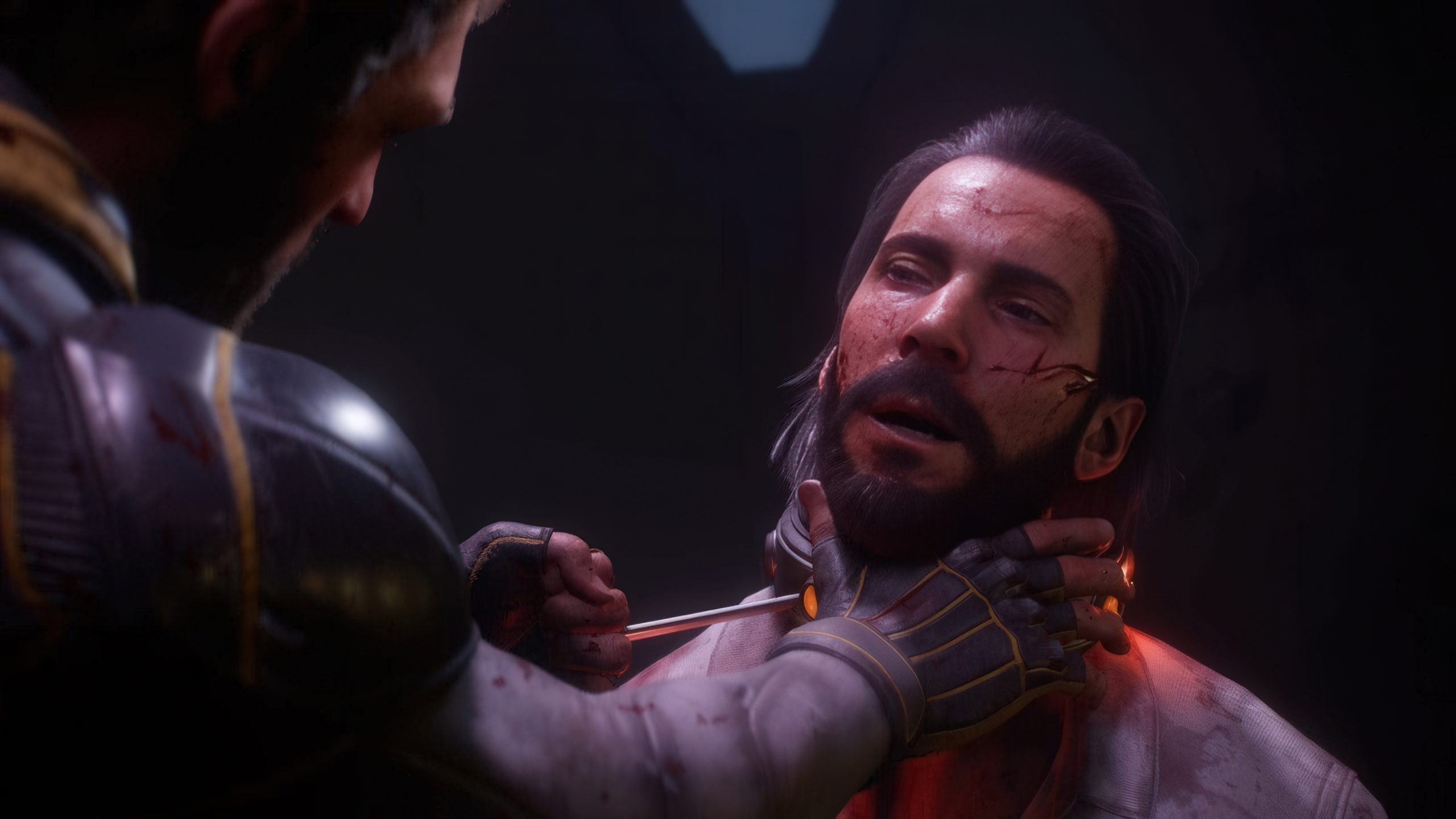
I said earlier that Marvel’s Wolverine stands on two pillars, combat and story, and I mean it. If the combat had me warming up to it throughout the game, the narrative was engaging from the start and only intensified, eventually reaching phenomenal emotional depth, particularly for those familiar with the character’s comic history. The story is original and, as such, does not specifically copy any single comic run. However, it draws heavily on the source material, weaving a story with multiple villains and factions (such as The Hand) of increasing complexity and danger, as well as supporting characters that are far from what they seem on the surface, in keeping with X-Men tradition.
Troy Baker lands yet another outstanding performance as Dr. Nathaniel Essex, but Krizia Bajos as Jean Grey and Liam McIntyre as the titular James ‘Logan’ Howlett/Wolverine were excellent, too. Interestingly, all three characters also feature the actor’s likenesses alongside their voices. By the way, I don’t think it’s too much of a spoiler to add that the post-credits scene teases a Wolverine 2 game with a familiar villain (who was already adapted to the big screen, albeit with mixed success).
Length, Replayability, and Tech
In terms of length, the PlayStation 5 dashboard shows it took about 14 hours to complete the game. After the credits, an on-screen message told me I was eligible to start a new playthrough through New Game Plus, in which Wolverine would start off with all the abilities unlocked, though with the possibility of reaching a higher level cap (thus increasing his overall health) and discovering four new “game-changing” Adaptations. However, I doubt many will go through such a linear experience again just to check them out. So, don’t expect to get a lot of replayability out of this title.
Visually, Marvel’s Wolverine looks and runs great on a PlayStation 5 Pro. It’s hardly a surprise, as Insomniac’s proprietary engine has long delivered outstanding visuals and solid optimization across the board. On a PS5 Pro, users can enable either Advanced Ray Tracing or a higher, more stable frame rate. I went with the latter, though I do wish a PC version were available, where all of this and more could be had at once. Unfortunately, Sony’s new policy on single player games means the PS5 Pro version is the best way to play this title.
Reviewed on PS5 Pro (code provided by the publisher).
You can find additional information about our standard review process and ethics policy here.
8.5
WCCFTECH RATING
Marvel’s Wolverine
Marvel’s Wolverine is a very different game from Insomniac’s Spider-Man adaptations, but it shows the developer really understands this hero, too. The combat took a while to grab me, and I wish some maps were larger, but eventually I really felt like the ultimate killing machine Wolverine is supposed. Meanwhile, the story kept me glued to the screen from start to finish.
- Insomniac shows that it understands Wolverine just as well as it does Spider-Man
- The combat eventually succeeds in portraying the level of pure carnage that this hero is capable of
- The narrative is the game’s biggest highlight, partly thanks to a fantastic performance by all the main actors
Pros
- Some of the maps are just too linear
- The combat takes a while to really flourish
Cons
Buy for from Amazon
The links above are affiliate links. As an Amazon Associate, Wccftech.com may
earn from qualifying purchases.

About the author: With over two decades of experience in gaming journalism, Alessio Palumbo has led the gaming vertical at Wccftech since August 2015. He started working at a young age for Italian websites like Everyeye.it, Gamestar.it, Nextgame.it, and Multiplayer.it before kickstarting the indie English-language publication Worlds Factory as its founder and Editor in Chief.
In the last decade, he has coordinated the overall output of Wccftech’s gaming section, managed PR relations, assigned reviews, produced daily news coverage, edited gaming content as needed, and delivered game reviews.
Arguably, his trademark content is the long series of exclusive developer interviews that have been cited by Wikipedia and by the biggest news media and gaming publications.
His passion for technology also makes him knowledgeable when it comes to gaming hardware and tech. His favorite genres include RPGs, MMORPGs, and action/adventure games.
Follow Wccftech on Google to get more of our news coverage in your feeds.